|
The oil lamp
is one of the oldest inventions
of mankind, evidence dating
between 15,000 to 12,000 years
before Christ. At this time
civilization, as we identify it,
was unknown and prehistoric man
inhabited cave-like
environments. One characteristic
prehistoric lamp was found in
the cave of Lasceau, located in
the area of Dordonis in France.
Discovered in 1940, this cave
was inhabited between 15,000 and
10,000 BC. Some archaeologists
believe that the first oil lamps
appeared as early as 70,000
years before Christ. Most of these
oil lamps were made of stone and
burned animal fat. Oil lamps
dating to around 4000 BC have
been found in Egypt where they
were used for centuries, not
only for the illumination of the
home, but also in religious
ritual, which was an integral
part of daily life at the time.
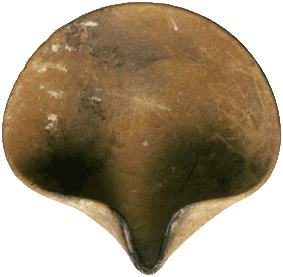 Oil
lamp from Egypt 3000 years BC Oil
lamp from Egypt 3000 years BC
In
historical times one such
ceremony, called Liknokaia (the
burning lamp), was held in honor
of the goddess Naiff, according
to the historian Herodotus.
During this celebration the
ancient Egyptians lit thousands
of oil lamps around the country
and in their homes. One
well-known Egyptian oil lamp was
the luxurious lamp of Isis,
which was used to illuminate the
statues of the gods. Records
reveal that in ancient Greece a
famous large oil lamp called
Callimachos, “the golden lamp”,
was kept in the Acropolis
in Athens and
burned daily with only one
refill of oil per year.
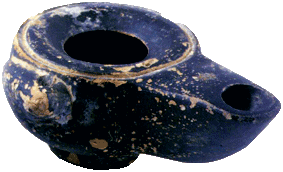 Oil
lamp from Greece 600-500 years
BC Oil
lamp from Greece 600-500 years
BC
Just as the
Egyptians, the ancient Greeks
also used oil lamps in death
ritual and other religious
ceremonies. For centuries the
oil lamp has served Man in the
practical needs of daily life,
remaining a constant reminder of
his connection to the sacred. The
production of oil lamps by
pottery wheel began about 600
BC. , followed by mould
production dating from 400-300
BC. The moulding process resulted
in the improvement of the
quality and decoration of the
lamps. Throughout history the
form and function of oil lamps
has steadily progressed.
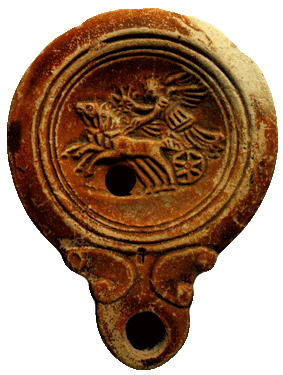 Roman
lamp 200 –300 years AD Roman
lamp 200 –300 years AD
The Romans
brought the oil lamp to Europe,
preserving their importance in
ceremony on the precedent of the
ancient Egyptians and Greeks.
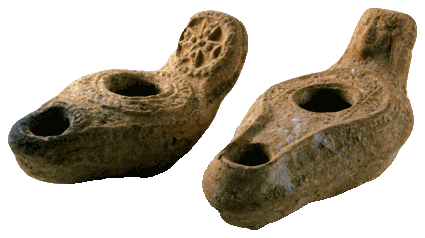 Byzantine
oil lamps 600-700 years AD Byzantine
oil lamps 600-700 years AD
In Late
Antiquity and through the
Byzantine Period, oil lamps
found symbolic use in the
Christian religion. The ancient
pagan decorative images on lamps
were replaced by the symbol of
the cross. For most of the
people around the world, the oil
lamp has historically played an
important role in society. One
need only recall the charming
Arabic tale of Aladdin, whose
‘magic’ lamp gained fame around
the world. As a historical
artefact, the oil lamp has
persisted from ancient times to
our own, making it a valuable
indicator of the progress of
civilization.
The oil lamps from Epalladio Art
Workshop are artistic
replicas, handmade with respect
for these thousands of years of
tradition. Our lamps are made of
stoneware
clay, and are guaranteed for
durability and functionality.
Our designs are characteristic
of those from museums around the
world. (We have given most of
our oil lamps the names of
ancient manufacturers). A lit
oil lamp promises to provide a
healthy and exotic atmosphere in
any home.
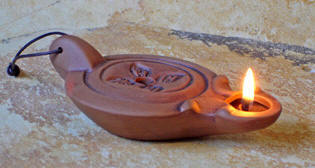 Oil lamp
by
Epalladio art
workshop
Oil lamp
by
Epalladio art
workshop
Experience
the unique light
of a lit oil lamp |